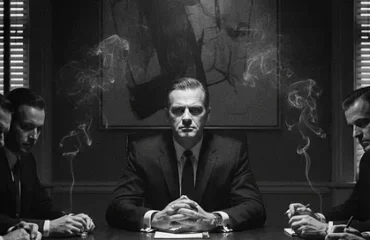
We have mastered the art of quiet giving when everything is running smoothly. We have become curators of knowledge and builders of bridges in calm waters. But the true character of a Lighthouse, much like that of a ship’s captain, is not tested in fair weather. It is tested in a storm. Inevitably, the moment will come when something goes wrong. A product will have a defect. A service will fail. Human error will occur. The client will be angry, frustrated, and disappointed. Their trust, which you built so meticulously, will hang by a thread.
For the average company, this is a moment for “damage control.” It is a crisis to be minimized. Scripts are activated, legal departments are put on standby, and the focus shifts to limiting liability. For a follower of the Lighthouse Methodology, this is something else entirely. This is an opportunity. Paradoxically, this is the most fertile ground for building unbreakable loyalty. Because a relationship that has never survived a crisis is as fragile as glass. A relationship that has weathered a storm together is forged in steel.
We continue our journey through the tenth principle, the Echo of Value, diving into the most difficult yet most rewarding aspect of quiet giving: providing support when it is needed most.
The phenomenon known as the “Service Recovery Paradox” is one of the most fascinating insights in consumer psychology (FN). Research has consistently shown that a client who experiences a service problem, but has that problem resolved in an extraordinary, empathetic, and rapid manner, ends up being more loyal and satisfied than a client who never had a problem at all. Why? Because the initial transaction was merely a promise. The service failure was a test of that promise. And a spectacular recovery was the proof. Proof that you truly care. Proof that your Covenant was not just a marketing catchphrase. A crisis, therefore, is not a threat to your brand; it is the most authentic stage upon which you can demonstrate your true values.
While others hide behind emails and ticketing systems, you, as a Lighthouse, shine brightest in the fog. Your approach to problem-solving is not defensive. It is offensive in its empathy and accountability. It consists of three steps: Absorb, Acknowledge, and Reverse.
1. Absorb the Blow: Listen to Emotion, Not Just Facts
When an angry client calls, their primary goal isn’t always to solve the problem immediately. Their primary need is to be heard. To have their frustration seen and validated. The worst thing you can do is interrupt them, start making excuses, or immediately jump into offering solutions. By doing that, you are signaling: “Your emotion makes me uncomfortable. Let’s get to the technicalities as quickly as possible.”
- Your Task: Absorb the full force of their dissatisfaction. Be the rock upon which their wave of anger breaks. Let them say everything they have to say. Do not defend yourself. Just listen. And as you listen, use all the skills from the fifth principle, Listening to Silence. Listen with your eyes to their body language, if you are meeting in person. Listen to the tone of their voice. Your goal is to hear what lies beneath the words. They aren’t just saying, “Your server went down.” They are saying, “You betrayed me. You left me high and dry in front of my boss.”
2. Acknowledge Unconditionally: “I” instead of “We”
Once they have finished, your first sentence will define the rest of the relationship. An amateur will say: “I understand your frustration, but…” or “We are sorry for the inconvenience; we will forward this to the technical department.” These phrases are impersonal and defensive.
- Your Covenant in Action: Your response must be personal, unconditional, and must take ownership of the problem. You are returning to the role of primary contact and partner.
“Ivan, thank you for calling me right away. I have let you down. What you just described is completely unacceptable, and I take full responsibility for making this right. Leave this to me. I will take care of everything. My only priority right now is to resolve this for you.” - What you have accomplished:
- You used “I” instead of “We”: You took personal responsibility. By doing so, you showed him that this isn’t just a “company problem,” but your personal problem.
- You validated his emotion: The phrase “completely unacceptable” tells him that you are on his side, that you see the world through his eyes.
- You took on the burden: “Leave this to me” are magic words. You lifted a massive weight off his shoulders and placed it on your own. In a moment of stress, that is the greatest gift you can give.
With an opening like this, you have completely disarmed his anger. He no longer has to fight you. Now, it is the two of you together against the problem.
3. Reverse the Experience: Above and Beyond Expectations
Now that you have calmed the storm, it is time for action. But not just any action. The goal is not merely to fix the problem. The goal is to solve it in a way that leaves them speechless. The goal is to turn this negative experience into a legendary story of customer service.
- Speed and Communication: Speed is crucial. But even more important is proactive communication. Do not leave them waiting in the dark. Keep them updated on every step. Even if you have no news, reach out and say: “We are still working on this. I haven’t forgotten about you.” This builds a sense of security.
- “The Repair plus the Gift”: Don’t just fix what is broken. Do something extra. Something unexpected. If the server went down, don’t just bring it back online. Analyze why it crashed and implement an additional monitoring system for free to ensure it never happens again. If a shipment was delayed, don’t just deliver the goods. Send it via the fastest courier at your own expense, and include that extra “surprise gift” we discussed.
- The Personal Touch: Once everything is resolved, don’t just send an email. Call them personally. Ask them how they are doing. Apologize once more, not just for the problem, but for the stress the problem caused them. That final human touch cements the experience.
At the end of this process, a miracle has occurred. The client, who called you in a rage 24 hours ago, is now telling a story. But it is no longer a story about your failure. It is a story about your character. It is a story they will tell others: “Yes, we had a problem. But the way they handled it… incredible. I have never experienced such support.” Your failure has become your most powerful marketing tool. You have proven that your Covenant was not just empty words. You have proven that you are a Lighthouse that shines brightest not when the sea is calm, but precisely when the greatest storm is brewing. And to such a lighthouse, every sailor trusts their life.
Tainted Salt and the Letter that Burned
The deal with Gasparo Malipiero regarding the “Cathedral of Salt” had become Matteo’s most profitable venture. The terracotta kiln in Chioggia ran day and night, producing flawless, dry salt crystals that Matteo sold at premium prices, not only in Venice but far beyond. One of the most significant shipments was destined for the Medici family in Florence, as part of a delicate peace treaty brokered by the Council of Ten. It was a deal of immense political weight.
And then, disaster struck.
One rainy evening, a messenger burst into Matteo’s shop, soaked to the bone, carrying a letter bearing the Medici seal. Matteo’s hands trembled as he broke the wax. The words were brief and icy. The shipment of salt, which was supposed to be the pinnacle of Venetian quality, was contaminated. A trace of bitter minerals had been found in one of the sacks, likely due to the negligence of a worker at the saltworks. The salt wasn’t just unusable; it was an insult. The contract had been breached, and with it, the fragile trust between two great cities.
Matteo felt the ground give way beneath him. His reputation, so painstakingly built, was on the verge of crumbling into dust. The old Matteo, the Hunter, would have immediately shifted into “damage control” mode. He would have summoned his lawyers. He would have drafted a letter of apology filled with legal jargon, blaming the saltworks, the transport, anyone but himself. He would have tried to mitigate the financial fallout.
But Matteo the Lighthouse remembered his Manifesto: My success is not measured by a signed contract, but by the client’s success. He realized this wasn’t a legal problem. This was a test of character.
Instead of calling a lawyer, he called his scribe, Paolo. He didn’t dictate a standard apology. He didn’t even try to explain what had happened. He composed a brief, brutally honest message for Cosimo de’ Medici. Then, he did something unthinkable. He took the most expensive banking contract in his shop, one worth thousands of ducats, flipped it over, and on the back, in his own hand, he transcribed the message.
When Paolo asked why he was destroying such a valuable document, Matteo replied, “Because the message must carry the weight of the mistake.”
Days later, the messenger delivered Matteo’s letter into the hands of Cosimo de’ Medici. The banker took it with a look of disdain. But then he paused. He felt the thick, costly parchment beneath his fingers. He turned it over. On the back, he saw the text of a contract with figures that impressed even him. Then, he read Matteo’s words on the front:
“Magnificent Cosimo,
Today, I, Matteo de Vicenzo, have done more than breach our agreement. I have betrayed your trust and disgraced the name of the Republic of Venice. For my failure, there is no excuse and no justification.
What has occurred is unacceptable. Therefore, I will not only fully reimburse the value of the shipment, but tomorrow, my personal transport departs for Florence. It carries double the amount of the finest salt, free of charge. Alongside it, I send a gift for your private table: a crate of the rarest black wine from Crete.
Yet I know that wine cannot wash away bitterness. The only thing I can offer is my vow. And my vow is this: I will personally, not my assistants, travel to Chioggia, and I will remain there until I have found and rooted out the cause of this error. I shall not return to Venice until I can guarantee you with my life that such a thing will never, ever happen again.
The responsibility is mine. I will make it right. Leave that burden to me.”
Cosimo de’ Medici stared at the letter for a long time. Then he did something no one expected. He laughed. Loudly.
He showed the letter to his advisors. “Gentlemen,” he said, “I have spent my life dealing with people who make excuses. This is the first time I have dealt with a man of character. I have found my partner in Venice.”
Matteo, as promised, spent a month at the saltworks. He discovered the problem lay with a single, negligent worker. He didn’t fire him. Instead, he retrained him and implemented a new, more rigorous control system. He returned to Venice not just with a resolved problem, but with a superior process.
His relationship with the Medicis, born of catastrophe, became the strongest and most profitable alliance he ever forged.
Years later, when someone would ask Matteo what his greatest sale was, he wouldn’t speak of Damascene daggers or Tyrian purple. He would tell the story of the tainted salt. Because that was when he learned the most important lesson of all: People do not remember your perfection. People remember how you conducted yourself when you were imperfect. Your failure, if embraced with courage and integrity, can become your most beautiful and persuasive story. It can become the proof that your vow is real, that you are a Lighthouse that shines brightest precisely when the darkness is thickest.
This is a part of my book “The Lighthouse Methodology”
This book is part of the Business Psychology Series – a complete system that explores how people think, decide, and act in business.
(FN) – McCollough, M. A., Berry, L. L., & Yadav, M. S. (2000). An Empirical Investigation of Customer Satisfaction After Service Failure and Recovery. Journal of Service Research, 3(2), 121–137. Retrieved from https://doi.org/10.1177/109467050032002 (This empirical paper is one of the foundational studies that explored and confirmed the “Service Recovery Paradox.” Through their research, the authors demonstrate that a successful recovery following a failure can lead to levels of satisfaction and loyalty higher than if the failure had never occurred in the first place. The key factors for successful recovery identified by the authors, speed, empathy, and compensation, align precisely with the “Absorb, Acknowledge, and Reverse” strategy described in the text.)